Every founder in the age of AI is, in a sense, the autonomous lord of a medieval city-state.
You may have no crown, no army, perhaps not even a working line of code. Yet you are doing exactly what a city-state lord did six hundred years ago: building a city from scratch on unclaimed territory, defining its borders (your market), recruiting its people (your team), establishing its laws (your product logic), and standing at the gate persuading passersby to stay.
Your promotion—every public statement, article, and post—is essentially a form of preaching. But you are not speaking to one generic “audience.”
You are addressing four fundamentally different groups.
The medieval lord faced nobles, clergy, townspeople, and peasants. The AI founder faces investors, industry experts, direct users, and the broader public. This is not merely a rhetorical analogy; the two structures are isomorphic.
1. Nobles: Capital and Alliances
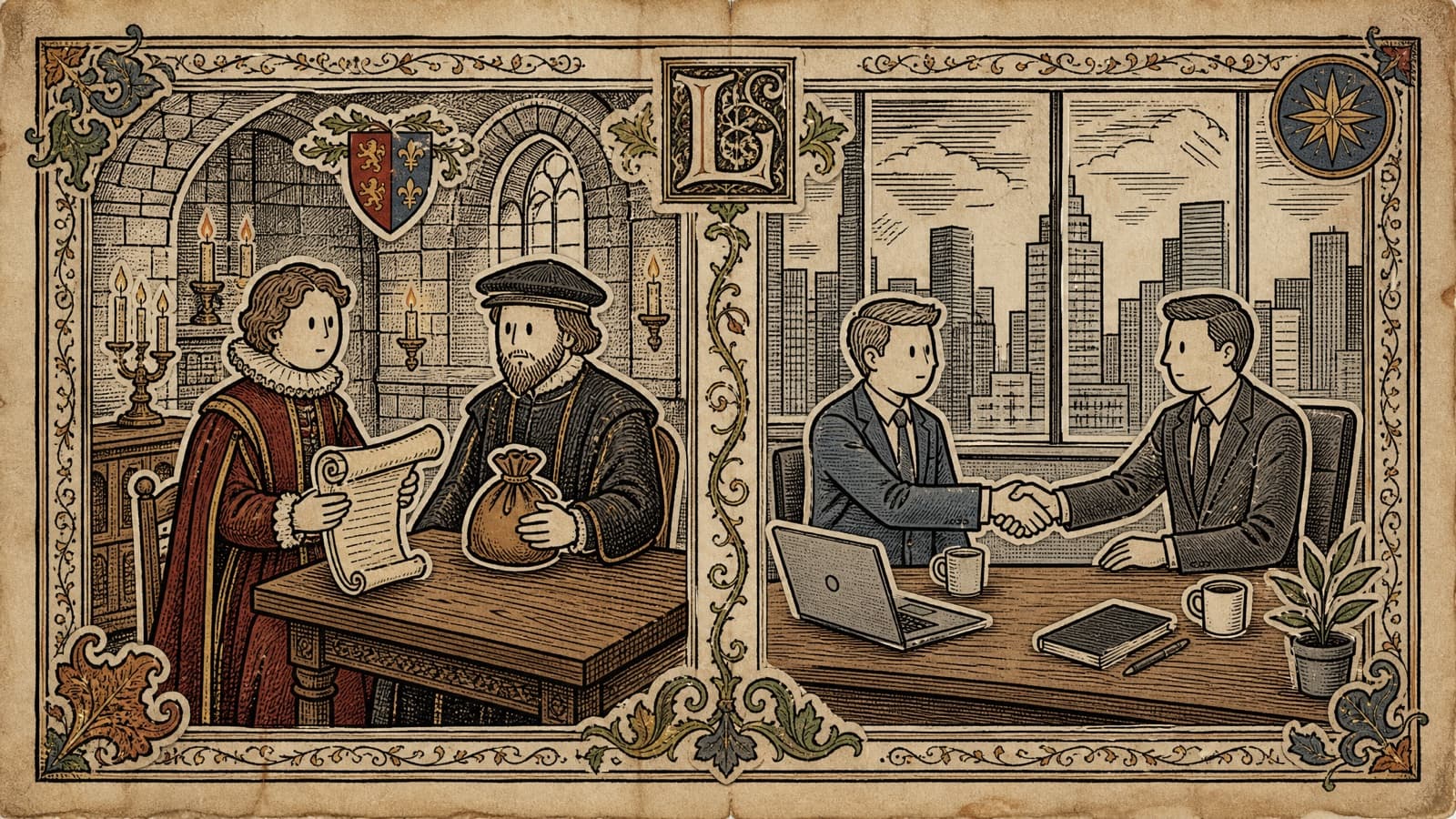
In a medieval autonomous city, nobles provided two essential things: money and networks.
Take fifteenth-century Florence. It was nominally a republic but effectively controlled by an oligarchic network of some two dozen powerful families—the Albizzi, Strozzi, and Pazzi, names with the weight that YC or a16z carries today.
Winning over the nobles was indispensable for any rising force seeking a foothold in the city.
Investors are your nobles.
They supply capital, the networks behind it, and sometimes protection in moments of trouble.
But nobles do not fundamentally seek to “help” you. They seek returns and alliances: they want their interests tied to a rising power.
In today's AI market, at least a dozen leading funds—including Sequoia, Founders Fund, and Iconiq—have invested in both OpenAI and Anthropic. By 2026, each company's cumulative funding was approaching $70 billion.
Nobles do not bet on loyalty. They bet on ascent: wherever momentum goes, their money follows.
What investors need to hear
Your territory is large enough. Investors must believe your market has room to grow.
A noble would not marry his daughter to a country gentleman with only three acres. Anthropic repeatedly frames AI safety not as a niche but as infrastructure for the entire AI industry—telling the nobles that its territory is as large as the kingdom itself.
You are still rising. Nobles bet on momentum. After returning from exile, every move Cosimo de' Medici made—winning the papacy's banking business, hosting the Council of Florence, and turning Florence into Europe's cultural center—broadcast that his power was still growing.
Investors likewise care less about how large you are today than whether you can keep rising tomorrow. Every release, milestone, and acceleration in user growth tells them: follow me, and there is still upside ahead.
2. Clergy: Reputation and Interpretive Authority
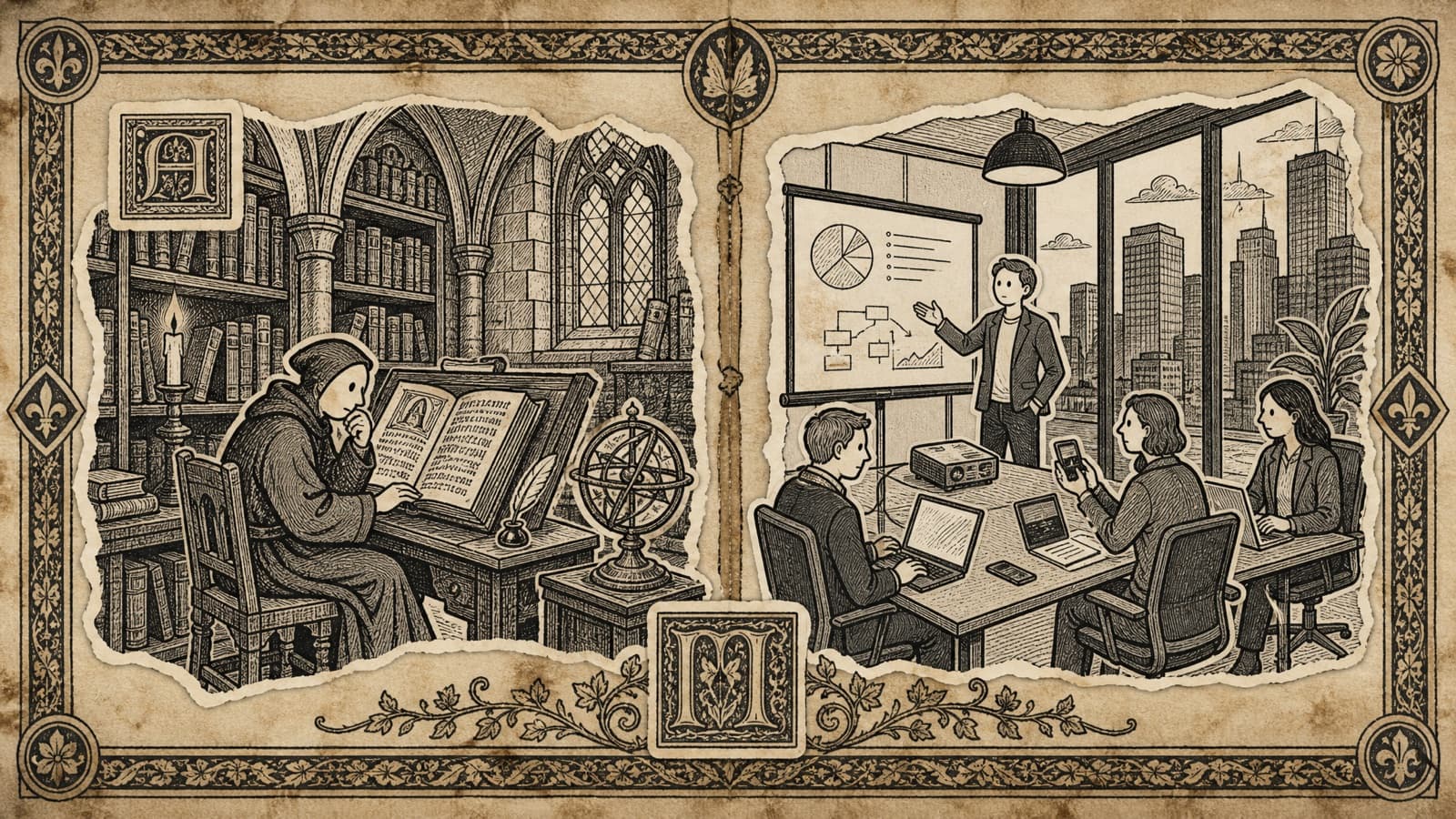
The clergy's central role was not merely religious; it was to monopolize interpretation. What counted as justice, morality, or a life worth remembering was decided not by kings or merchants but by clerics. They wrote chronicles, delivered funeral orations, and determined from the pulpit whether a reputation would endure in honor or disgrace.
This explains the Medici family's deep investment in the Church. Lending, the core business of the Medici Bank, was sinful under Christian doctrine.
Small Florentine pawnbrokers paid annual penalties for the “sin of usury” and were socially despised. The Medici, however, used sophisticated bills of exchange and profited from currency differences between branches, recasting “interest” as foreign-exchange gains or losses.
Many theologians supported this interpretation—not least because the Church itself was a major client. Over a century, the Medici funded churches and art and placed family members in holy office, ultimately producing three popes: Leo X, Clement VII, and Leo XI.
The label “usurer” became “devout patron.” This was more than image laundering; it was a struggle for interpretive authority.
Industry experts, opinion leaders, and central figures in technical communities are your clergy.
They do not supply capital; they supply something scarcer: legitimacy.
Whether an AI product's technical direction is “right” or a team is “credible” is not decided automatically by the market. It emerges from repeated discussion among a small circle of recognized experts and KOLs. Every review and comment is a miniature verdict.
Consider Dario Amodei's handling of the 2025 US Department of Defense contract dispute. He reframed a $200 million commercial conflict as a principled story about AI safety. Anthropic's reputation did not fall; its valuation rose by $150 billion.
With the clergy on your side, the same event can be framed as either scandal or integrity.
Two kinds of clergy
The clergy itself contained an important division. Monastic scholars studied scripture, preserved knowledge, and advanced theology. Parish priests preached to believers, performed sacraments, and shaped public opinion.
One group produced knowledge; the other spread belief.
The distinction is equally important in AI entrepreneurship. Your “clergy” has two faces:
First are scholars—top technical talent and domain experts. They may not address the public, but their capabilities form the city's intellectual foundations. Monastic scholars helped produce universities and early science: Copernicus was a cleric; Roger Bacon a Franciscan friar.
Renaissance figures such as Leonardo, Brunelleschi, and Galileo no longer wore robes, yet all benefited from the Church's intellectual tradition before civic wealth helped free them from its framework.
Scholars seek not a public platform but research freedom and resources: a workshop, ample materials, and room to build without interference.
Second are preachers—KOLs and industry opinion leaders. Like parish priests, they define for the crowd what deserves belief and allegiance. Their power lies not in what they build but in their ability to influence thousands of judgments. They seek a platform and a respected position.
The two groups require different forms of cultivation, but the goal converges.
How to cultivate them
Support their “monastery.” Cosimo built one of Europe's finest libraries at San Marco, providing scholars with a research base and preachers with intellectual ammunition.
Scholars need freedom and resources, not short-term KPIs. Preacher-type KOLs often value informational advantage and a platform more than money.
Because YouTube and Reddit are heavily cited by large language models, a review video now feeds both human audiences and AI search engines. An in-depth KOL review can become a salesperson working around the clock.
Early access, beta participation, and a “chief reviewer” role at a launch are modern forms of monastic patronage.
Inscribe their names on your work. Medici commissions bore the family's mark, but also preserved the creator's name. The strongest relationship binds both sides: cite experts, collaborate with them, and give them a role in your product story. This is not flattery; it makes their reputation and your enterprise mutually reinforcing.
The final objective is recruitment. The Medici did not merely win endorsements; their family produced three popes, while talents such as Leonardo and Michelangelo became deeply tied to them.
Your ultimate goal is likewise to turn supported scholars into teammates who build with you, and commentators into advocates for your cause. That is the clergy's greatest potential value.
3. Townspeople: Bread and the Dome
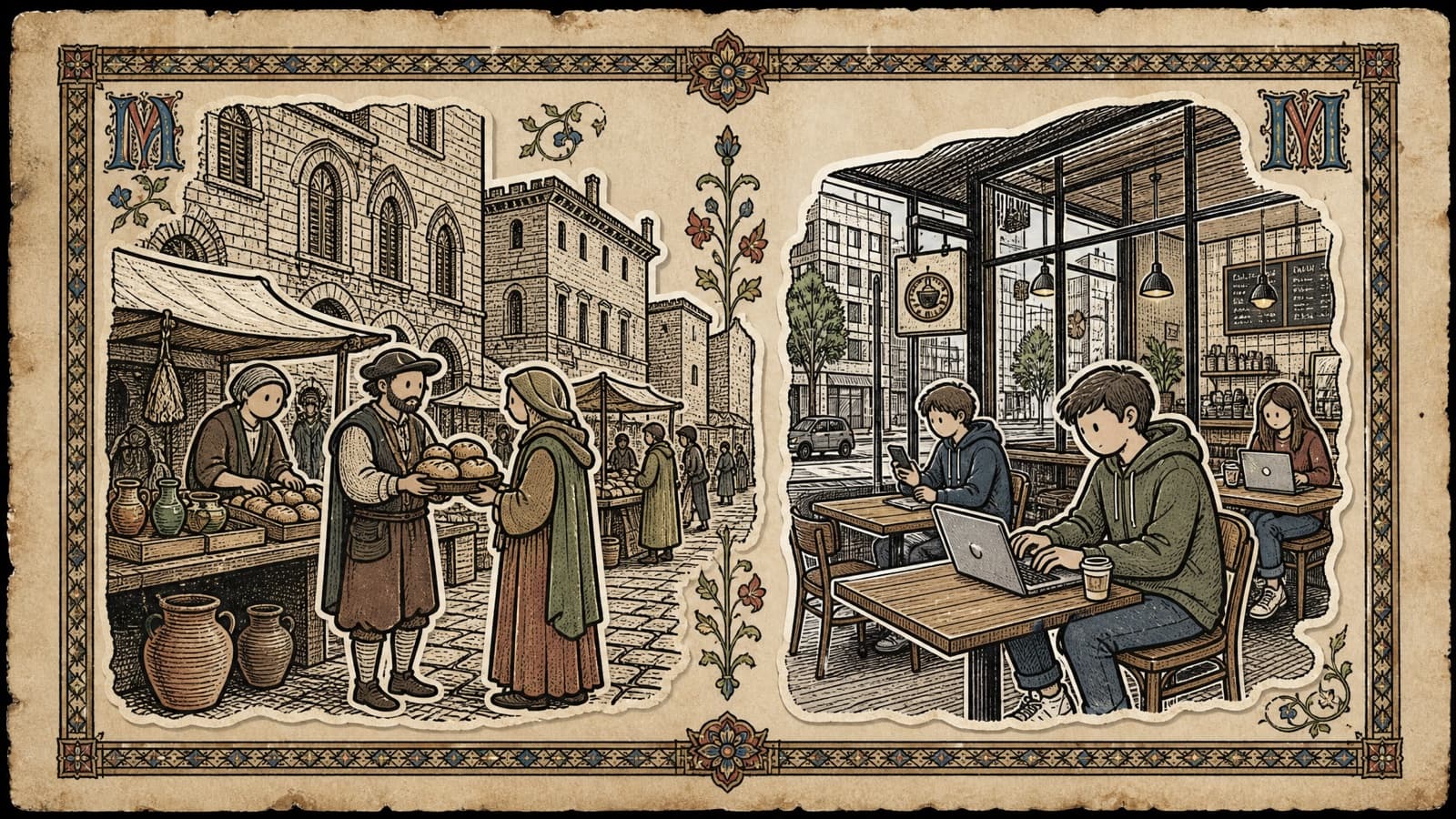
The townspeople—guild members, artisans, and merchants—were the city's economic base. They paid taxes, consumed, and kept the system running.
Nobles could be bought and clerics supported, but citizens had to be persuaded. There was only one way: make their lives genuinely better.
The Medici did two things. First came material benefit: churches, libraries, and squares created steady work and income.
Lorenzo later calculated that since 1434 the family had spent more than 600,000 florins on public affairs. Much of it went to building and art commissions that sustained thousands of Florentine masons, carpenters, painters, and goldsmiths. During downturns, Medici commissions stabilized the city's economy.
Second came spectacle: Brunelleschi's dome and Donatello's sculptures were not hidden in private homes but displayed as public possessions in churches and squares.
At 114 meters, the cathedral dome was then the world's largest masonry dome, visible from almost anywhere in Florence.
The Medici did not need to say, “We made the city better.” The dome said it every day.
Your direct users are your townspeople.
Your message to citizens differs entirely from your message to nobles or clergy. Nobles listen for strategy; clergy judge your direction. Citizens want a felt experience: did your product actually improve my life?
What users need to feel
Build your “dome.” Every product needs a signature aha moment that makes a first-time user say “wow.” For ChatGPT, it was seeing the first answer to a first prompt; for early Midjourney users, it was watching words become images.
The feature may be small, but like Brunelleschi's dome it becomes the mental landmark that anchors the product.
Put the work in the public square. Product value should be demonstrable: something users want to screenshot, recommend, and share.
Midjourney grew through users posting generated images; Cursor spread as developers showed themselves coding with it on Twitter. The best promotion is not what you say, but what your citizens say for you.
Remember that citizens can vote with their feet. Florentine artisans could leave for Venice or Milan; your users can leave too. Loyalty is not built through lock-in but through continuous product improvement—the daily “bread” that accumulates trust over time.
4. Peasants: The Silent Reserve
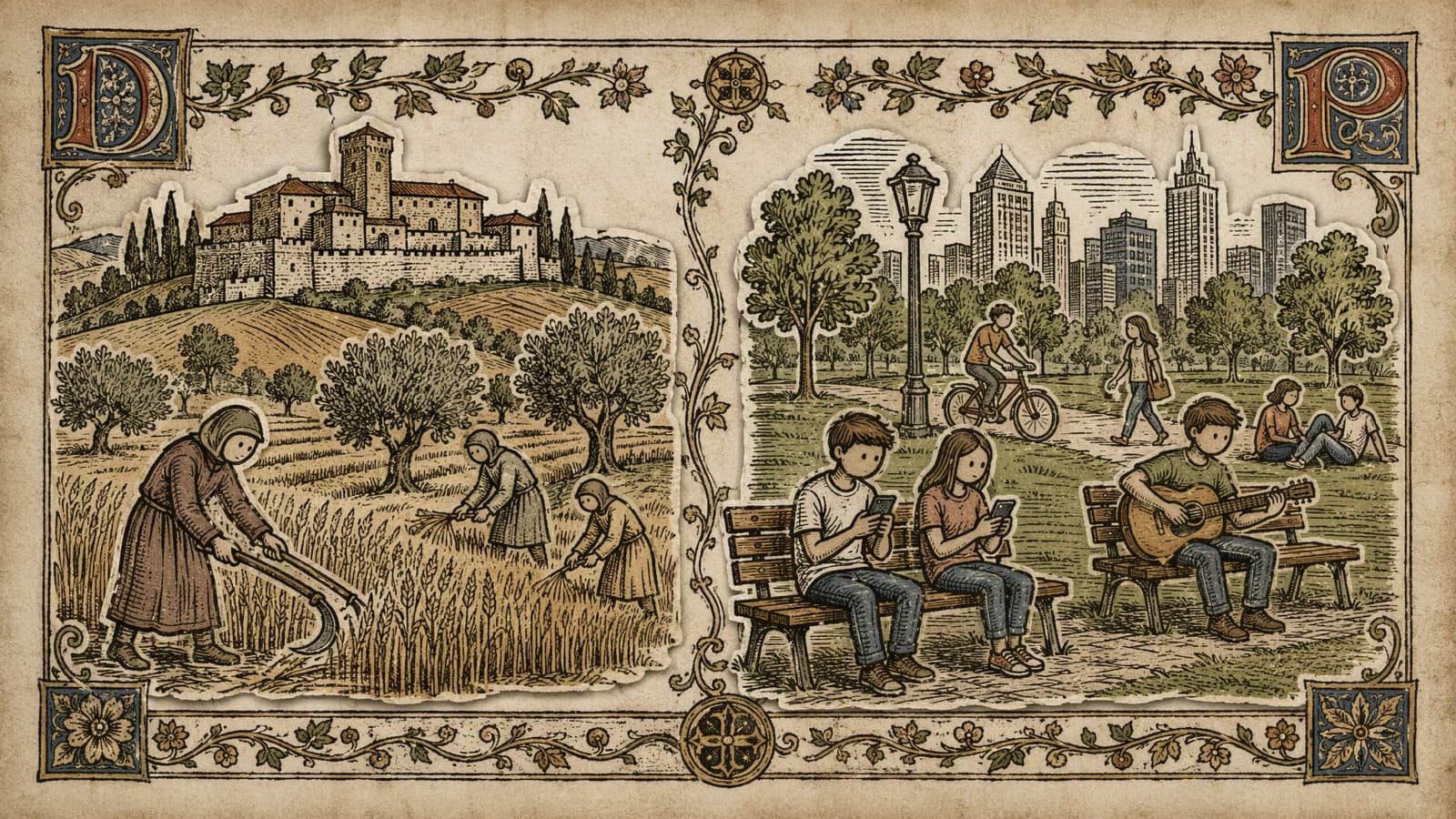
In medieval urban politics, peasants were nearly invisible. They lived outside the walls and supplied the city's food, yet had no political voice.
Any wise ruler knew that ignoring them was dangerous. In Florence's 1378 Ciompi Revolt, low-ranking wool carders—barred from guild membership and entirely unrepresented—rose together, briefly overthrew the oligarchy, and established the most democratic government in Florentine history.
They were even recognized as a new guild and gained seats in government. Conservatives crushed the regime within months.
The revolt left an enduring lesson: a silent majority is not a nonexistent majority.
The broader public—people who do not use your product and may not even know who you are—are your peasants.
Why the broader public matters
They are your future talent pool. A college student who happens to see your name today may, three years later, use that vague impression when choosing an employer. Public communication plants seeds for future recruitment.
They define your grassroots reputation. Clergy shape elite discourse, but peasants shape word of mouth. Vague impressions—“Is this company reliable?” “I've heard of them; they seem all right”—form the atmosphere around you.
Investors sense that atmosphere during diligence. Candidates sense it when weighing an offer.
In a crisis, they are your buffer. When negative publicity strikes, the public's baseline impression determines whether you receive a presumption of innocence or guilt. Goodwill accumulated in ordinary times becomes a levee in the storm.
Your message to this group differs from all the others. They need not understand your technology, calculate your returns, or use your product deeply. You need only one thing: for them to feel that you are a good person.
This may sound almost childish, but mass communication transmits impressions of character more than information.
Cosimo ruled Florence for thirty years without dressing splendidly or calling himself king. He walked the streets in plain robes, signaling that he was no vulgar upstart.
The opposite dynamic appeared when Sam Altman was removed and reinstated by OpenAI's board in 2023. Public opinion quickly split between “hero fighting for AI” and “power-hungry manipulator.”
The polarization arose not only from the event but from the absence of a firmly established public image. Without a stable grassroots reputation, opponents can fill the narrative vacuum in a crisis.
Every social-media post and public appearance shapes the same kind of impression—not merely “this company is impressive,” but “this person feels decent to me.”
5. Four Voices in the Age of the Internet
The framework at a glance
| Group | Medieval | AI era | What they want | Your posture |
|---|---|---|---|---|
| Nobles | Oligarchic families | Investors | Territory, returns, alliances | The most useful ally |
| Clergy | Clerics, scholars | Experts, KOLs | Direction, legitimacy, respect | A devoted patron |
| Townspeople | Guilds, merchants | Direct users | Experience, value, improvement | One who improves the city |
| Peasants | Workers beyond the walls | The broader public | Character and baseline goodwill | A trustworthy, decent person |
Modern founders face one difficulty medieval lords did not: the internet has abolished physical separation.
Cosimo could tell different groups different things in different settings. Today, investors see what you tell developers on X, while ordinary users can search for the story you tell in a fundraising pitch. All four audiences have been compressed into one public square.
Your four sermons therefore cannot contradict one another.
They must be four parts of one composition: different melodies, unified harmony.
Nobles hear strategic ambition; clergy hear professional sincerity; citizens hear a product promise; peasants hear the quality of your character.
All four voices must come from the same core, or one discordant part will be amplified by the internet's echo chamber into a crisis of trust.
That core cannot be faked.
Cosimo could speak to all four groups not because he was a gifted performer, but because the dome was real, the library was real, the artisans' wages were real, and stable food prices were real.
The best promotion is an undertaking worthy of being promoted.